

Infographic: What is the Difference Between State Act and the Longshore Act?

Infographic: What is the Difference Between State Act and the Longshore Act?

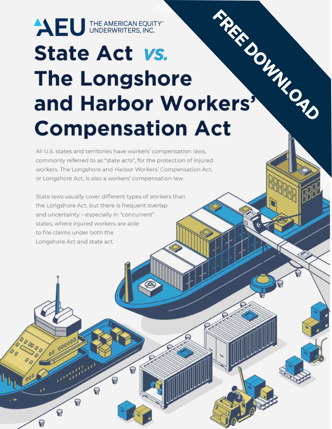
All U.S. states and territories have workers’ compensation laws, commonly referred to as “state acts”, for the protection of injured of workers. The Longshore and Harbor Workers’ Compensation Act, or Longshore Act, is also a workers’ compensation law.

State laws usually cover different types of workers than the Longshore Act, but there is frequent overlap and uncertainty – especially in “concurrent” states, where injured workers are able to file claims under both the Longshore Act and state act.

The most important difference for employers is that state workers’ compensation laws and the Longshore Act are separate exposures. Overlapping jurisdictions and coverage uncertainties mean employers must be sure to have the correct coverage.
Download Infographic

FREE DOWNLOAD - Inforgraphic - Whats the Difference Between State Act and Longshore Act REBRAND


Need Longshore Coverage? Click Here

Share:

Related Topics

More Resources

Part One: Review of Insurance Compliance Provisions Under the Longshore Act

Longshore Insider Podcast | Choosing the Right Safety Supervisor

Safety Is Everyone's Job

Shifting Boundaries of Navigable Waters | Part Three

When Are Maritime Injuries Covered? USL&H Explained

Legal Disclaimer

Views expressed here do not constitute legal advice. The information contained herein is for general guidance of matter only and not for the purpose of providing legal advice. Discussion of insurance policy language is descriptive only. Every policy has different policy language. Coverage afforded under any insurance policy issued is subject to individual policy terms and conditions. Please refer to your policy for the actual language.