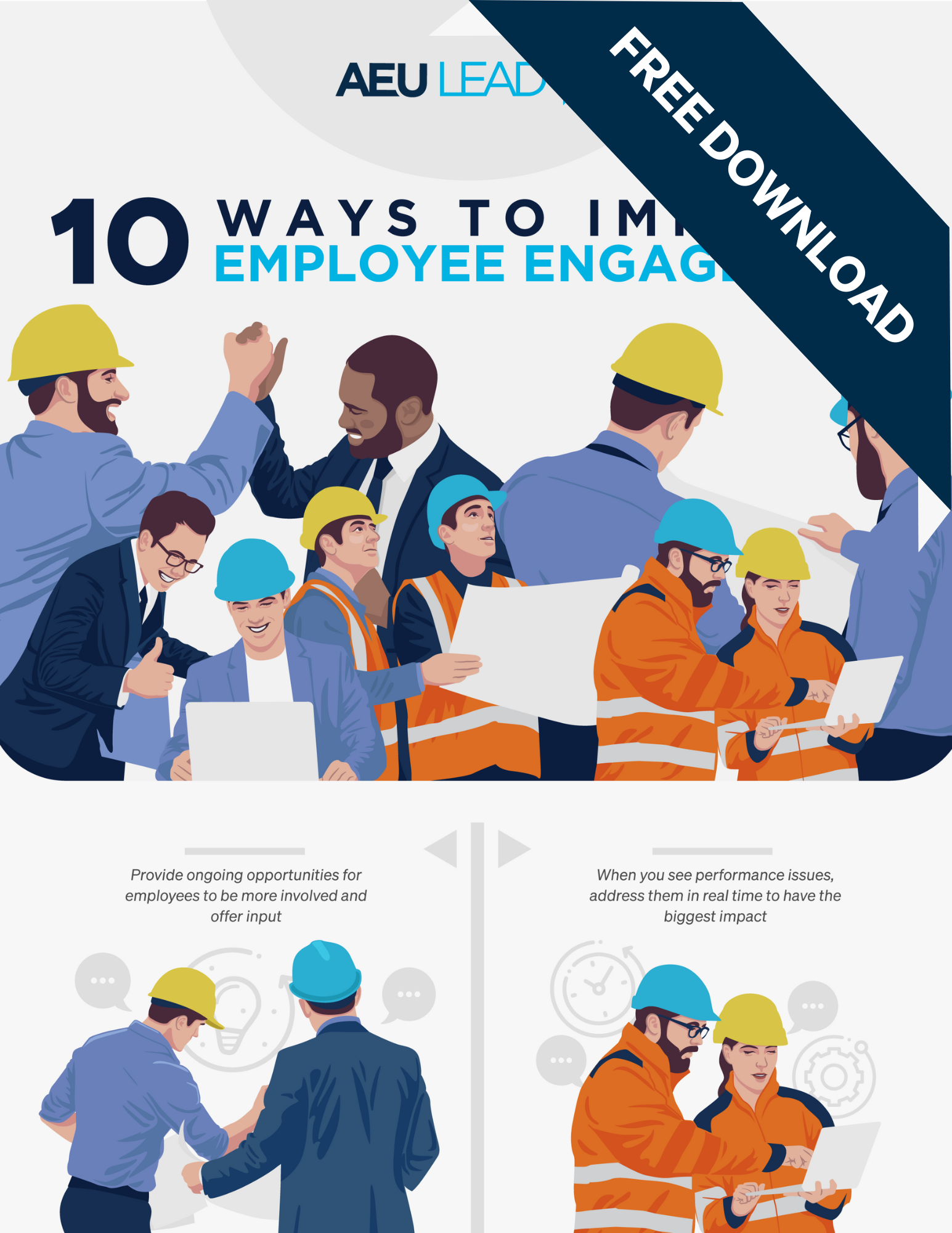

Front line leaders – including supervisors, foremen and lead personnel – have a huge impact on employee engagement. When employees feel engaged and committed to doing great work for their company, it has an immeasurable effect on overall morale and turnover. Happy employees also make for happy customers, so a high level of employee engagement can improve your bottom line as well.
Here are 10 ways that you can improve employee engagement at your company. Consider talking about these simple steps in your conversations with supervisors so they understand the role they have in the process.
- Provide ongoing opportunities for employees to be more involved and offer input
- Look for opportunities that could help an employee grow personally or professionally
- Be specific about which behaviors you’re showing appreciation for
- Consider how the employee wants you to communicate or demonstrate appreciation
- Be sincere when expressing appreciation
- Give constructive feedback to employees routinely
- When you see performance issues, address them in real time to have the biggest impact
- Seek to understand why an employee performed a certain way before addressing issues
- Always tie performance outcomes to job or behavior expectations
- Strive for mutual agreement when providing constructive feedback