
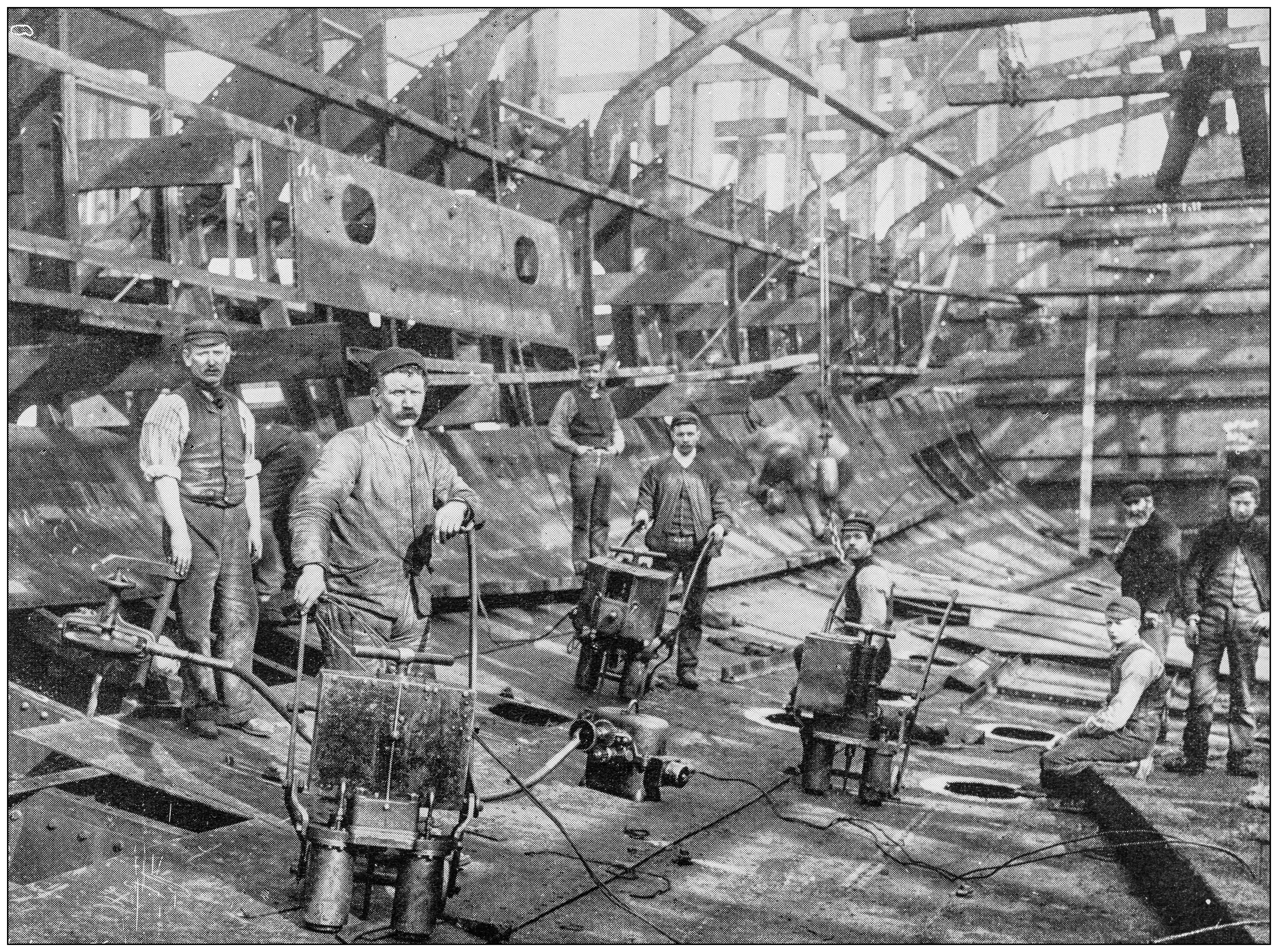
March 4, 1927: Waterfront Workers’ Comp Begins
March 4, 1927 is the enactment date of the Longshore and Harbor Workers’ Compensation Act, commonly called USL&H. The date marks the moment the maritime industry finally got a consistent workers’ compensation system. Before USL&H, coverage could shift based on where an employee was standing when something went wrong, which meant employers faced uncertainty and injured workers sometimes faced delays and disputes instead of quick benefits.
Why the Waterfront Needed a Federal Solution
By the early 1900s, most states had workers’ compensation laws, and for many workplaces those laws did what they were meant to do. The waterfront was different. Maritime commerce often takes place on navigable waters and right beside them, and courts treated some of those injuries as part of federal maritime law rather than a purely state issue. The result was a problem nobody wants in the middle of a busy operation. A worker gets hurt, the job has to keep moving, and everyone needs to know which system applies. When the answer was unclear, the risk landed on both employers and employees.
For employers operating around ports, docks, terminals, shipyards, and adjacent waterfront facilities, USL&H insurance is not simply state workers’ compensation with a different label. It is a separate federal system with its own coverage rules, benefit structure, and compliance requirements, and it can apply even when the work feels mostly on land.
Learn more: Related resources from Longshore Insider
- What is the difference between State Act and Longshore
- Infographic: What is the Difference Between State Act and the Longshore Act
1917: Jensen Highlights a Coverage Gap
A major turning point came in 1917 with Southern Pacific Co. v. Jensen. The Supreme Court limited when states could apply workers’ compensation to certain injuries on navigable waters. In practice, that decision exposed a gap. People were doing essential maritime work, but the availability of state benefits could hinge on the legal line between state authority and federal maritime jurisdiction.
1920 and 1924: Congress Tries a State Based Fix, and the Court Rejects It
Congress tried to close the Jensen gap by allowing states to apply their workers’ compensation laws in certain maritime cases. The Supreme Court rejected those attempts, including Knickerbocker Ice Co. v. Stewart in 1920 and Washington v. W.C. Dawson & Co. in 1924. After those rulings, the message was clear. If the waterfront was going to have a reliable compensation system for injuries tied to maritime commerce, it had to come from a federal law.
1927: Congress Enacts the Longshore Act
In 1927, Congress enacted USL&H to turn uncertainty into a workable, predictable system. The Act created a federal compensation framework for many land based maritime workers who support the flow of commerce, including longshore operations, shipbuilding and ship repair, and other covered waterfront activity.
More detail: For a deeper historical walkthrough, see AEU’s three part series:
- A Brief History of the Longshore Act: Part I
- A Brief History of the Longshore Act: Part II
- A Brief History of the Longshore Act: Part III
How the Law Evolved: Amendments That Shaped Modern Coverage
USL&H did not stay frozen in 1927. As ports modernized, shipyards expanded, and job roles shifted, the law evolved too. Two amendment periods are especially important for today’s employers.
The 1972 amendments expanded coverage shoreward and helped reduce the whiplash effect of employees moving in and out of coverage as they crossed the water’s edge during a shift. After 1972, courts developed the coverage framework many people refer to as status and situs. You do not need to speak in legal shorthand to use the idea. Think of it as two practical questions: Where is the work happening, and is the work maritime in nature? The answers help determine whether USL&H applies.
The 1984 amendments refined definitions and administrative details, aiming to make the system more workable after the earlier expansion. For employers, it is a reminder that coverage decisions should be based on how the law functions today, not just how people remember it from years ago.
USL&H and the Jones Act: Why Classification Matters
A frequent source of confusion is the difference between USL&H and the Jones Act. They address different categories of maritime workers and provide different remedies. Most employers do not need to memorize every legal test, but they do need to classify workers correctly. When classification is wrong, the fallout is rarely theoretical. It shows up as coverage gaps, disputes, delayed benefits, and expensive disruption when an incident occurs.
How History Explains Your Current Risk
This history is also why USL&H insurance is treated as a specialized line. It exists because the waterfront needed a dependable remedy when state systems could not consistently cover maritime injuries. That federal foundation is what gives the Act its strength, but it is also why coverage questions can get detailed fast when duties and locations overlap.
The business takeaway is straightforward. If your operations include maritime work, you want support that matches the way work actually happens on the waterfront. That means understanding the realities of job duties and job sites, handling claims with USL&H expertise, providing loss control support that fits shipyard and terminal conditions, and offering practical consulting so you can reduce surprises when an incident happens.
What This Means for Maritime Employers
The Jensen era confusion is not just a law school story. It explains why insurance compliance under USL&H is a real operational issue. Because the Act is federal, and because the consequences for being uninsured can be severe, employers benefit from treating coverage decisions, certificates, and documentation as part of everyday risk management, not as paperwork to chase after the fact.
- Part One: Review of Insurance Compliance Provisions Under the Longshore Act
- Part Two: Review of Insurance Compliance Provisions Under the Longshore Act.
March 4 as an Annual Educational Moment
March 4 is a useful annual reminder because it ties a real date to a real industry need. The waterfront required a purpose built compensation framework when other systems could not consistently reach maritime injuries. For employers, it is also a practical moment to refresh supervisor training, brief new hires, and revisit internal guidance on when USL&H coverage may apply across your facilities.
If your organization is unsure where USL&H exposure begins and ends, these Longshore Insider resources are a helpful place to start:
- Three Important Things to Know About Longshore Act Coverage
- Part One: Review of Insurance Compliance Provisions Under the Longshore Act
- Part Two: Review of Insurance Compliance Provisions Under the Longshore Act
Longshore and Harbor Workers’ Compensation was built to close a real coverage gap for waterfront work, and that original purpose still shows up in how claims and coverage decisions play out today. Understanding where the law came from helps maritime employers protect their crews, stay compliant, and choose coverage that fits the realities of the job.


